Status: Open to recruitment.



Background
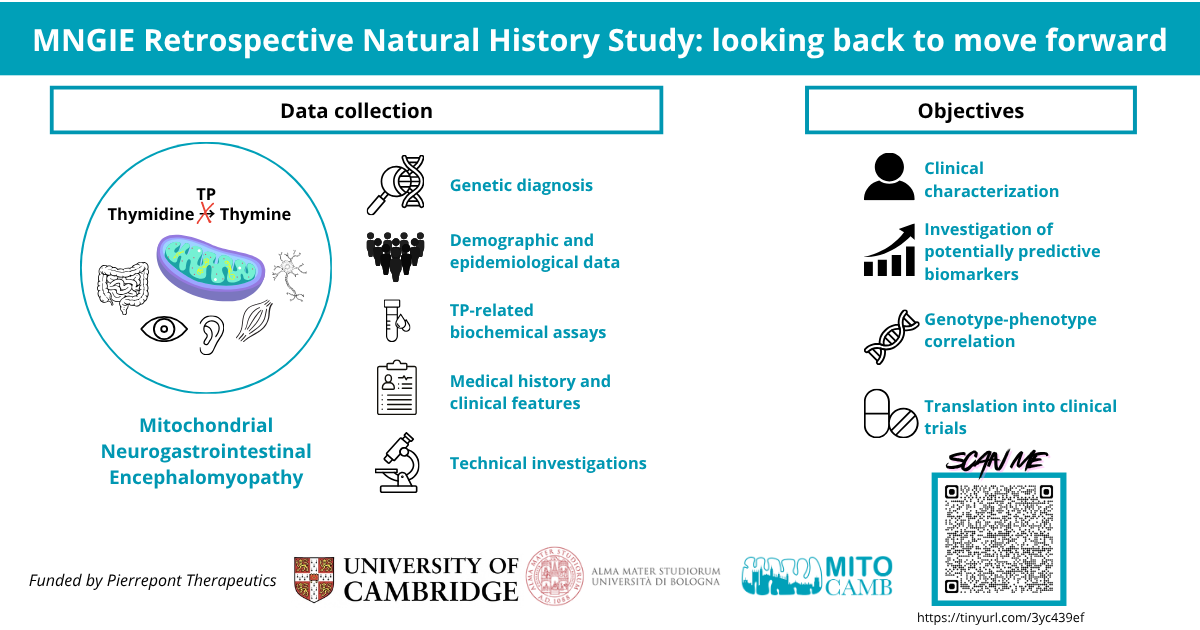
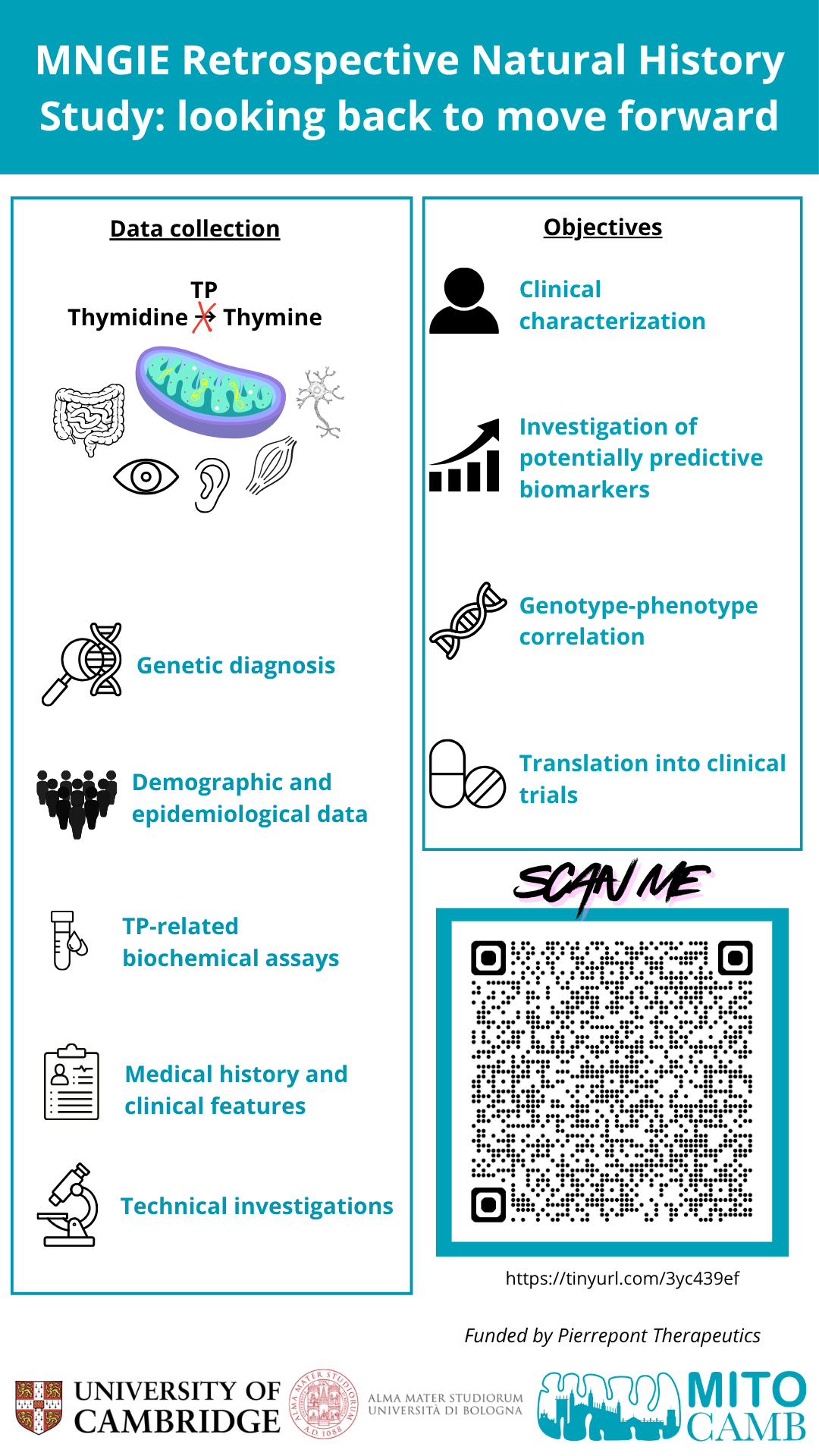
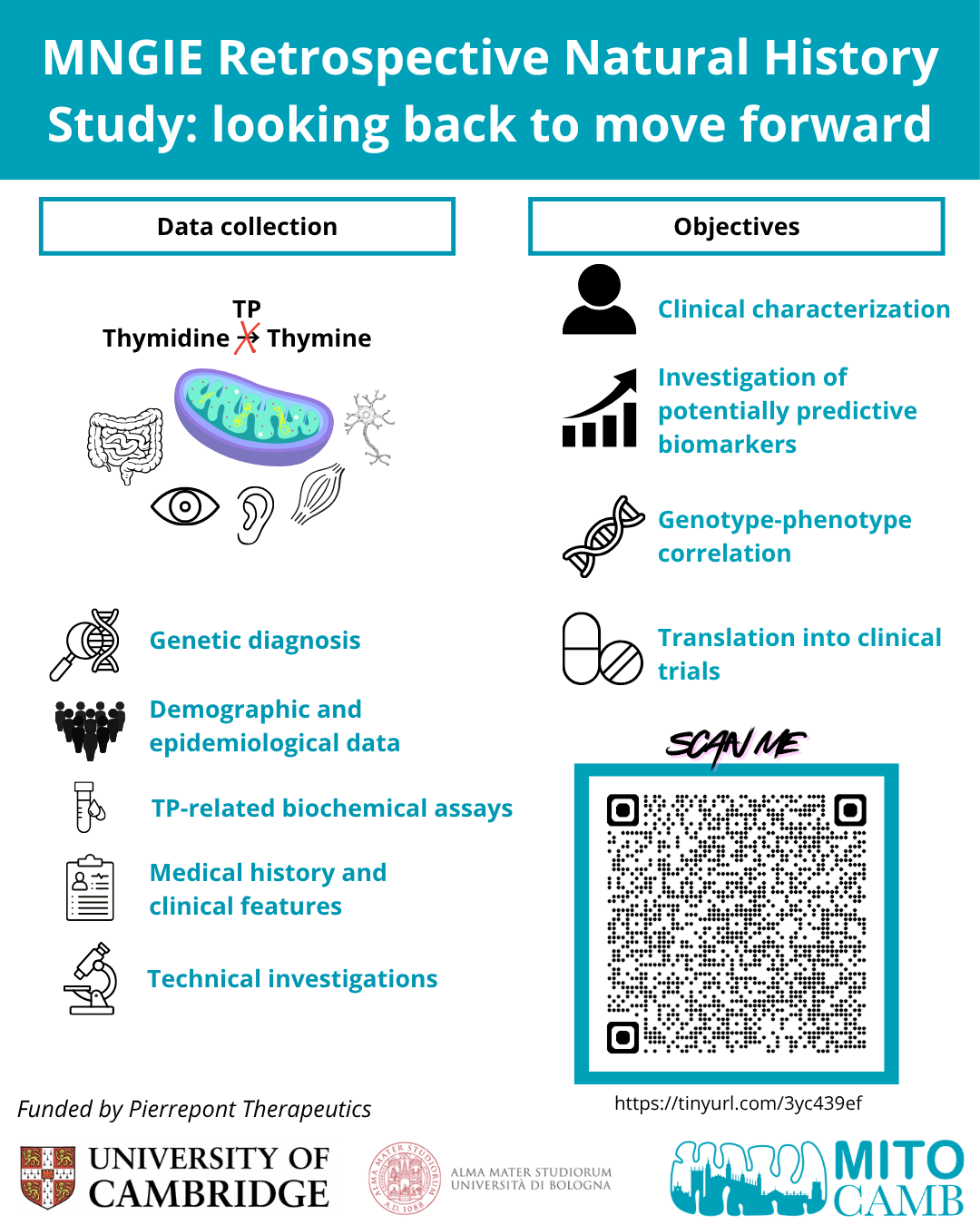
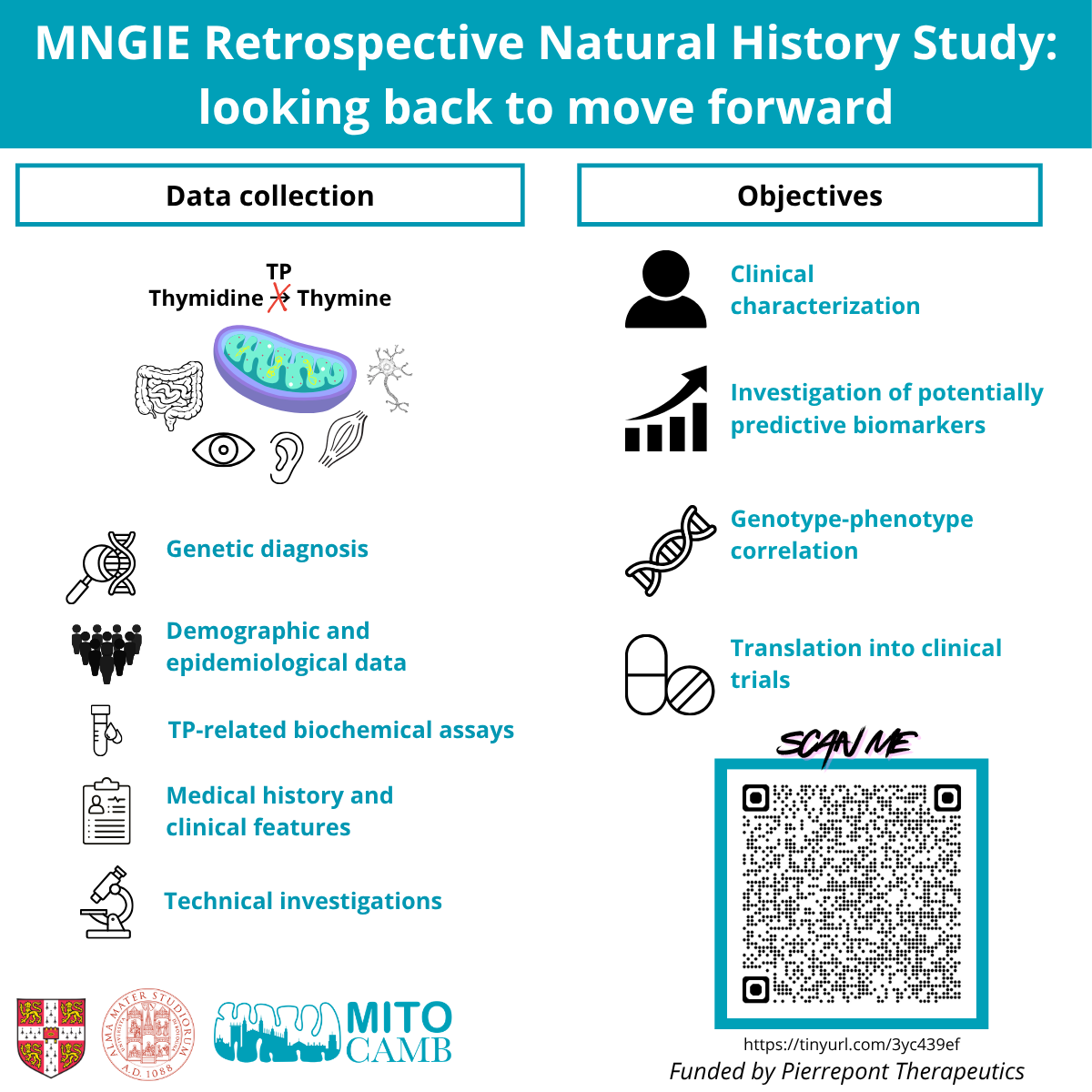
MNGIE (Mitochondrial Neuro-Gastro-Intestinal Encephalomyopathy) is an ultra-rare mitochondrial disease, caused by mutations in the TYMP gene. Innovative treatment strategies are emerging for MNGIE, including gene therapies, enzyme replacement therapy, and other advanced medicinal therapies. Some of these will soon be tested in clinical trials. However, a comprehensive and up-to-date natural history study of MNGIE will be crucial to inform the design of these clinical trials and to select appropriate clinical and biochemical outcome measures.
Frequently asked questions (FAQs)
This natural history study aims to include as many cases of MNGIE as possible, by recruiting worldwide, including both published and unpublished patients, as well as patients who are already part of other disease registries, who have passed away, or who have received treatments like liver or bone marrow transplantation. We will focus on describing clinical progression, and identifying biochemical, molecular, histological, and histochemical parameters that can help in early diagnosis, improve prognosis, and better understand therapeutic outcomes.
Research Aims
This study aims to collect existing patient data from clinicians worldwide, to understand how the rare mitochondrial disease, MNGIE, affects individuals (living or deceased), how their disease progresses over time, and how current treatments affect them.
Who can take part?
We are looking for clinicians who follow/have followed patients affected by MNGIE, either in a clinical or in a research setting, and who would be willing to share anonymised clinical information via an online secure survey.
If you or someone in your family, are affected by MNGIE, and you would like your clinical data to be included in this study, feel free to share this information with your treating clinician. They can then contact the study team, who will share a link to the survey with them
What does it involve to take part?
Anonymous data will be collected in a secure REDCap database through an online questionnaire/survey. The survey should be completed by a clinician or their delegates.
All data will be stored in a secure environment at the University of Cambridge (United Kingdom). Completing the survey will take approximately 30 minutes to 1 hour.
Please let us know if you have any questions, by email: add-tr.mitoteam@nhs.net
This is a worldwide, collaborative study led by clinical researchers from the University of Cambridge (Dr. Jelle van den Ameele) and University of Bologna (Prof. Caterina Garone). The study is funded by Pierrepont Therapeutics Inc, and has received ethical approval from the University of Cambridge Human Biology Research Ethics Committee
This study has been registered on ClinicalTrials.gov, with study number NCT07627217